
Garlic Quail Egg Jangjorim(메추리알 조림)
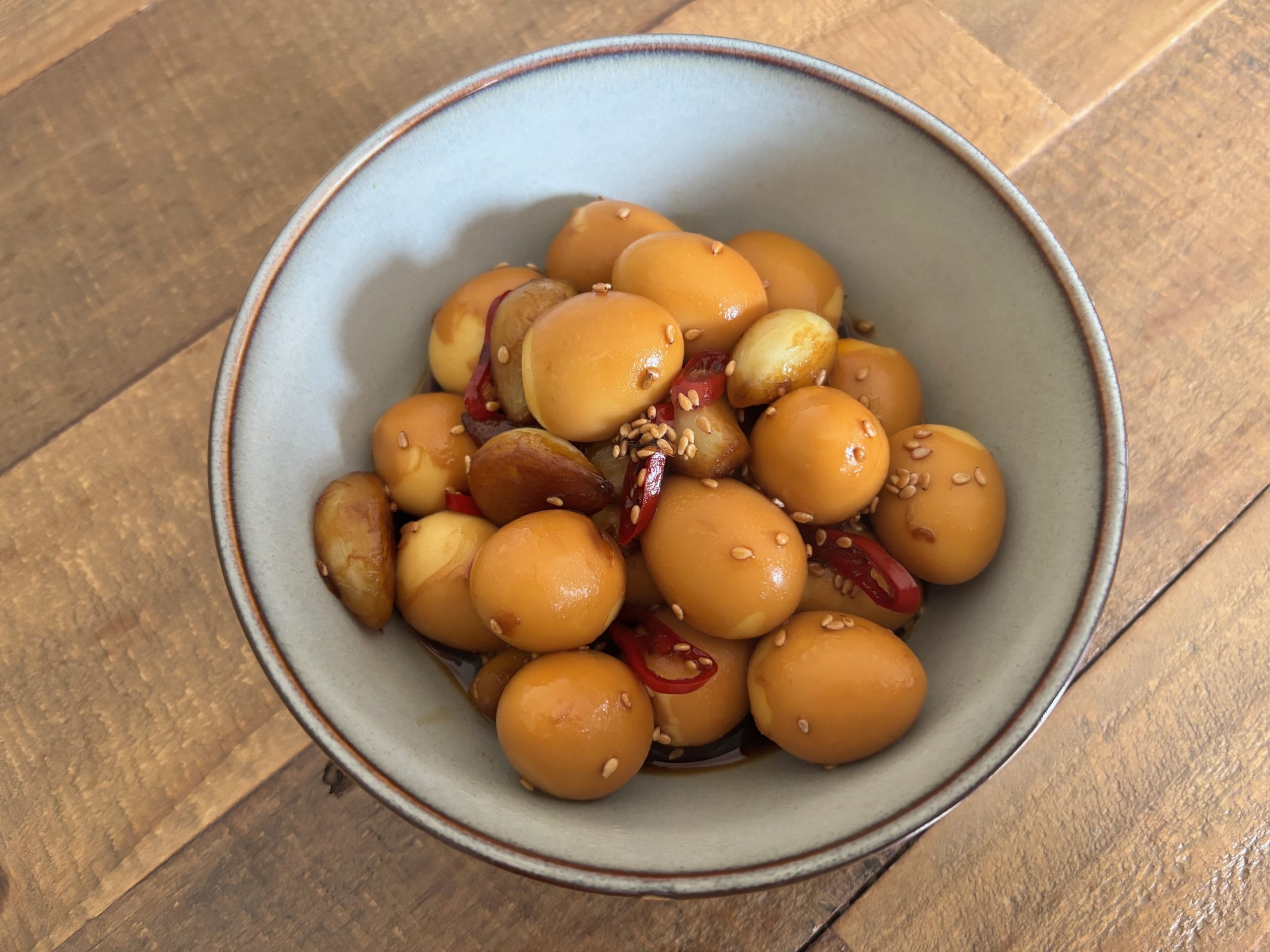
Quail Egg Jangjorim is one of the most familiar and comforting Korean side dishes, commonly served both at home and in restaurants. It’s known for being easy to prepare, especially if you buy pre-peeled quail eggs. However, when peeled eggs aren’t available, it can become a slightly more time-consuming dish since peeling each egg takes patience.
Despite that, quail egg jangjorim is highly versatile. Many home cooks enhance the dish by adding small cuts of meat, creating a richer, more filling version. Others mix in vegetables such as shishito peppers or potatoes to add texture and additional flavour. Because of its flexibility and mild, savoury taste, it remains a beloved side dish in everyday Korean meals.
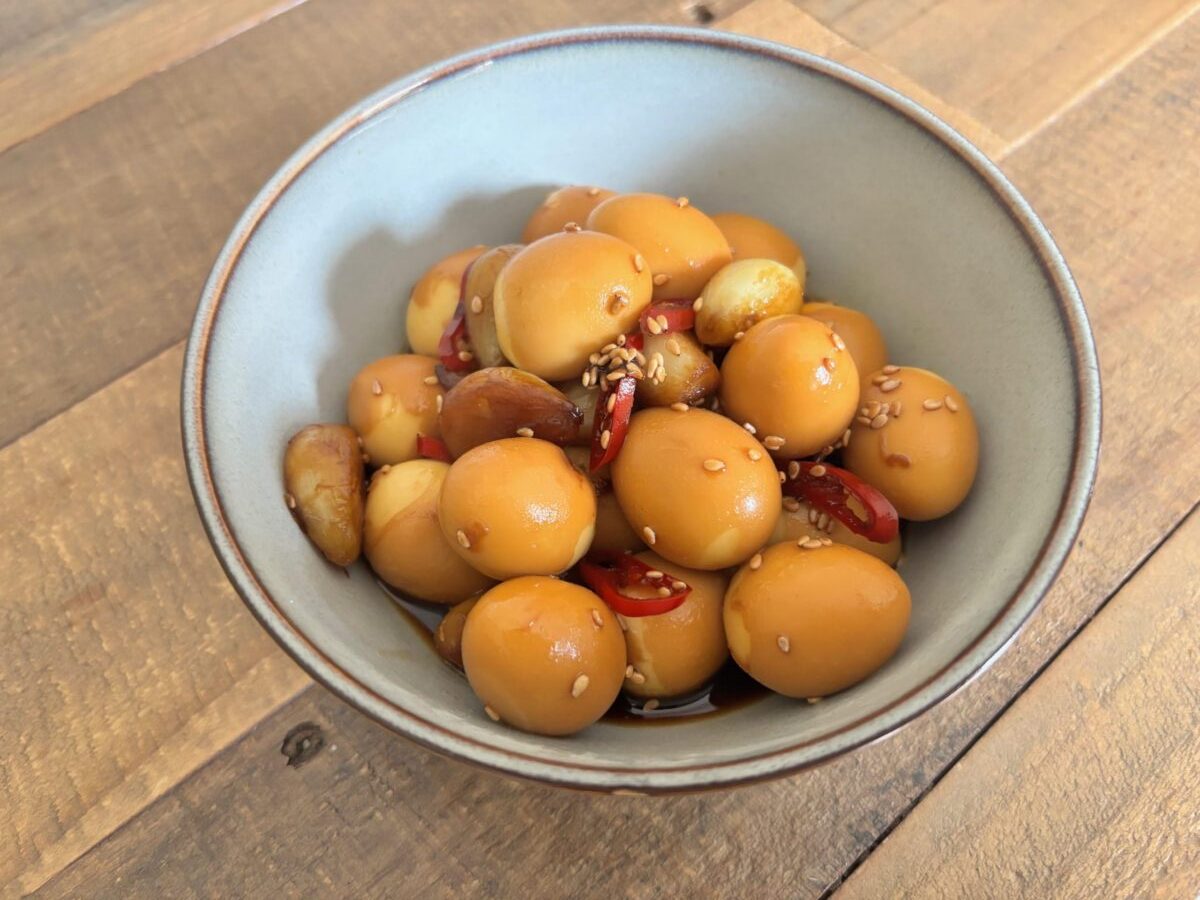
Garlic Quail Egg Jangjorim(메추리알 조림)
Quail Egg Jangjorim is a common Korean side dish you often see at home or in restaurants. It’s simple to make, but if you can’t find pre-peeled quail eggs, it can take a bit more effort. The dish is versatile, you can braise it with meat or add ingredients like shishito peppers or potatoes for variation.
Ingredients
Method
- Boil the Quail Eggs
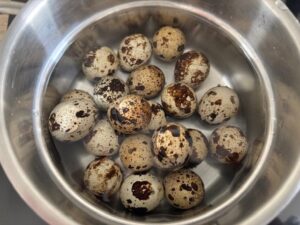
- Start with cold water, boil for 8–10 minutes, then cool in cold water and peel.
- Make the Sauce :4 tbsp soy sauce 6 tbsp water2 tbsp cooking wine (mirin)1.5 tbsp sugar2 piece of kelp 1/2 sliced chilli
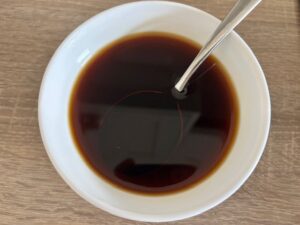
- Heat 1 tbsp of cooking oil in a pan. Add whole garlic cloves and sauté on low–medium heat until lightly golden and fragrant.
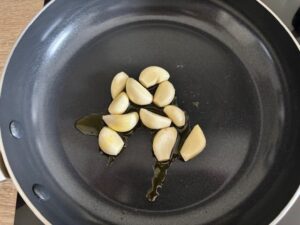
- and add the sauce into the cooked garlic,
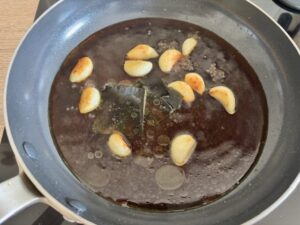
- once the sauce is boiling, add the feeled quail Eggs.
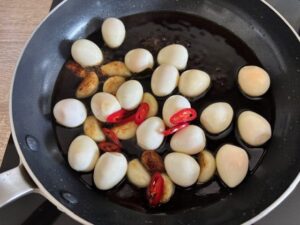
- Simmer on low–medium heat for 5 minutes to extract umami. After 5 minutes, remove the kelp (leaving it in too long can make the sauce slimy).
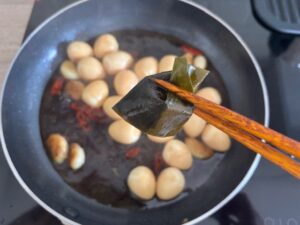
- Simmer on low heat for 10–12 minutes. Stir gently from time to time so the sauce coats the eggs evenly. (Be gentle—they can crack if stirred too hard.)
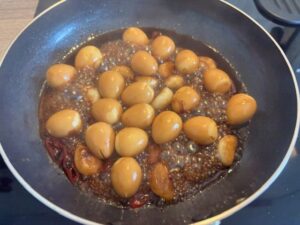
- Add 1 tbsp corn syrup or oligo syrup at the end for shine. Turn off the heat and drizzle a little sesame oil. Sprinkle sesame seeds.
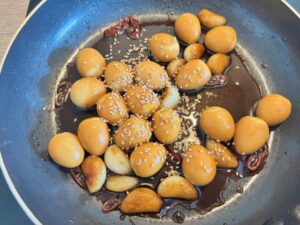
- Let it cool slightly, flavour deepens as it rests.
Notes
⭐ Tips for the Best Quail Egg Jangjorim
1. Stir gently for even flavour
Quail eggs are delicate—stir occasionally but gently so the soy sauce coats evenly without cracking the eggs.2. Use kelp for deeper umami
Boiling kelp for exactly 5 minutes gives you a clean, savoury flavour.Any longer and the broth may become slimy.
3. Pre-sauté the garlic
Lightly frying whole garlic cloves before adding the sauce boosts aroma and depth.4. Balance the sweetness at the end
Add syrup (corn syrup or oligo syrup) at the final stage. It gives a glossy finish and prevents burning.5. Let it rest before serving
This dish tastes even better after cooling because the eggs absorb more sauce.Many people make it the night before for maximum flavor.
6. Adjust sweetness–saltiness to your style
- More soy sauce → more savoury and bold
- More sugar/syrup → sweeter & smoother
- Add a bit of water if it gets too salty
7. Add-ins make it more fun
- Meat → deeper, richer broth
- Shishito peppers or green chilli → mild or spicy kick
- Potatoes → softer, heartier side dish
8. If peeling eggs is hard
Use cold-water start + ice bath to make peeling easier.Or buy pre-peeled quail eggs if available.
9. Don’t reduce too much
Leave some sauce at the bottom—jangjorim should be glossy, not dry.Please follow and like us:


