
Pork Kimchi Stew (Kimchi Jjigae) 김치찌개
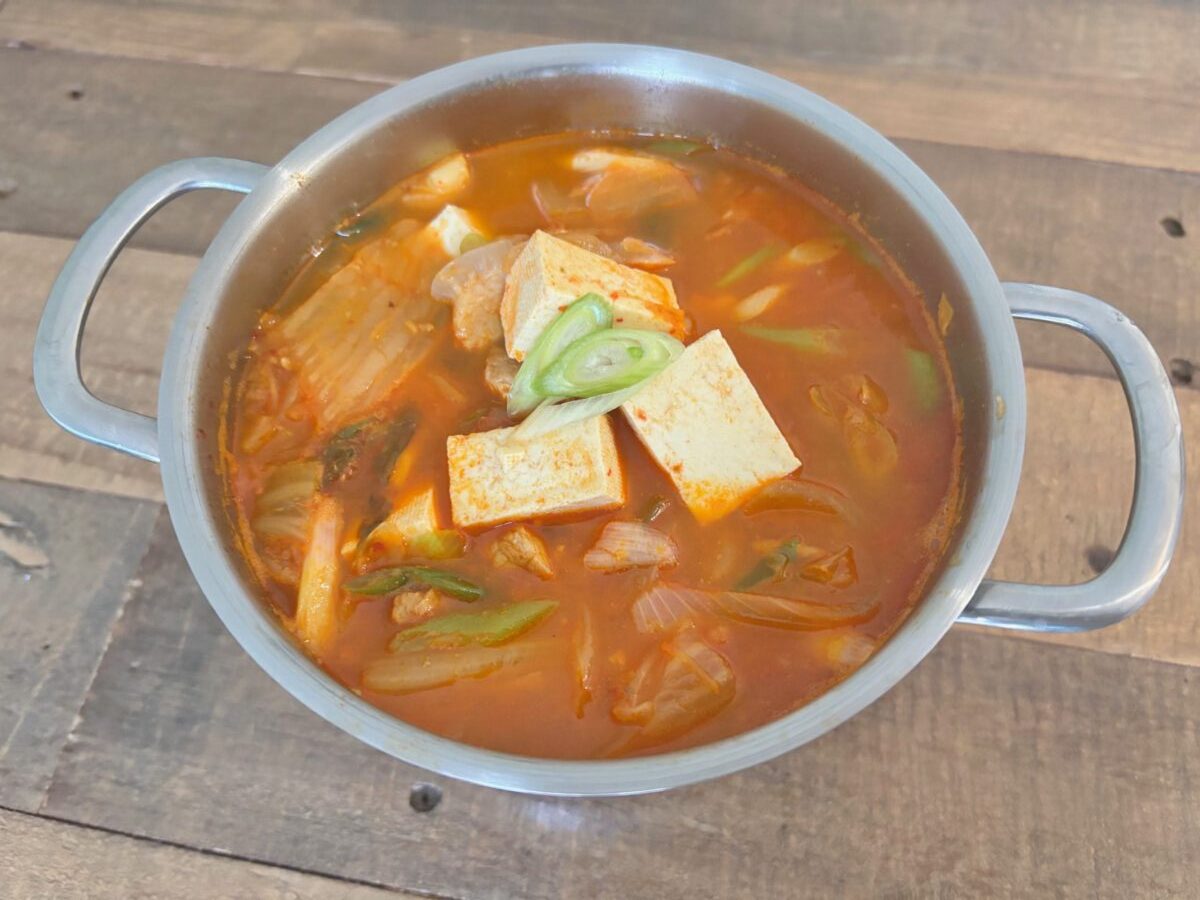
🥘 An Introduction to Kimchi Jjigae
Kimchi Jjigae is one of the most beloved comfort foods in Korean cuisine—a dish that feels like home even if you’re thousands of miles away. At its heart, it’s a simple stew made with aged kimchi and pork, simmered until all the bold flavors blend into a deep, satisfying broth. But for Koreans, Kimchi Jjigae is more than just a recipe; it’s a memory, a tradition, and a taste of everyday life.
Most Korean households have their own version, passed down from mothers and grandmothers who instinctively “just know” how much seasoning to add. It’s the kind of dish you make when you don’t know what to cook, when a friend drops by unexpectedly, or when the weather turns cold and you crave something warming and familiar.
💬 A Short Story About Kimchi Jjigae
Imagine a chilly evening in Seoul: traffic humming in the distance, a faint smell of toasted sesame oil drifting from nearby restaurants. You step into a small, cozy home where someone is preparing dinner. The moment the pot opens, the warm, spicy aroma of Kimchi Jjigae fills the kitchen.
The stew begins with stir-frying aged kimchi—sour, spicy, and full of character—until it softens and releases its fragrance. Pork belly sizzles alongside it, adding richness and depth. Water and kimchi juice are added, and the pot simmers gently, sending small bubbling pops to the surface. The stew becomes thicker, redder, more soulful as the ingredients meld together.
Soon, tofu slices are added, soaking up all the goodness. Green onions go in last, brightening the flavor just before serving.
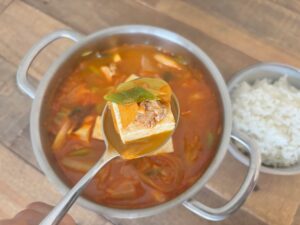
Everyone gathers around the table. A bowl of steaming rice waits beside the pot. When the stew is ladled out, it’s spicy, savory, slightly tangy, and deeply comforting—like a warm hug in food form. No matter how tired or stressed you were before, Kimchi Jjigae has a way of grounding you.
🌶 Why It Means So Much
Kimchi Jjigae represents:
- Resourcefulness: Turning leftover kimchi into an entirely new dish.
- Warmth: A stew that brings families together at the table.
- Tradition: A flavor passed through generations, yet still evolving in every home.
- Comfort: A reliable, humble meal that satisfies the soul.

Pork Kimchi Stew (Kimchi Jjigae)
Ingredients
Method
- Pork (Samgyeopsal or other cuts)Cut the pork into bite-sized pieces (about 2–3 cm).

Kimchi
Use aged (sour) kimchi for the best flavour. Cut it into small strips or bite-sized chunks so it cooks evenly. Keep some kimchi juice aside for later; it adds depth and colour to the broth.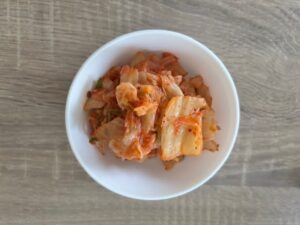
Onion
Slice half an onion into thin or medium slices. This helps it melt into the stew and sweeten the broth naturally.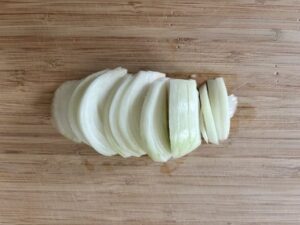
Green Onion
Slice the green onion diagonally into 1–2 cm pieces.Add it near the end to keep the flavour fresh and aromatic.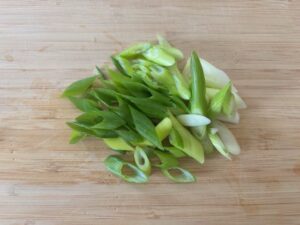
Tofu
Cut the tofu into thick rectangular slices or cubes.Add toward the end so it doesn’t break apart.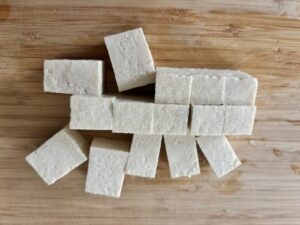
Garlic
Use minced garlic—fresh is best. No need to prepare anything special beyond chopping or using pre-minced.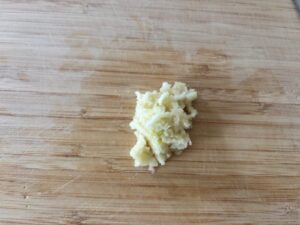
- Heat 1 tbsp of cooking oil in a pot and stir-fry the pork until most of the pink is gone. If using pork belly, you don’t need extra oil when stir-frying since the fat will render out naturally.
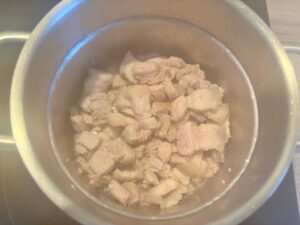
- Season lightly with pepper.
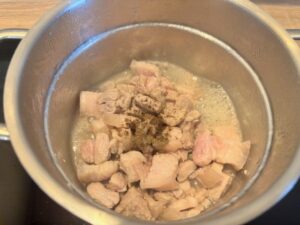
- Add the aged kimchi and stir-fry together for 3–5 minutes.
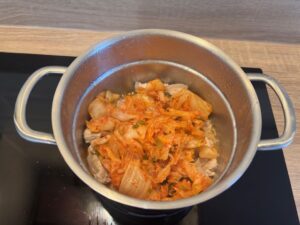
- This step deepens the flavor of the stew.

- Add 1 tbsp of gochugaru and 1 tbsp of minced garlic.
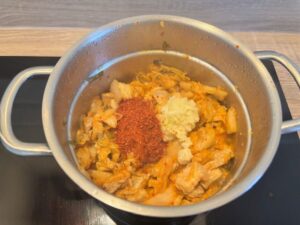
- Stir for about 30 seconds on medium-low heat so it doesn’t burn.

- Pour in 2–2.5 cups of water and 1/2 cup of kimchi juice. Bring to a boil.
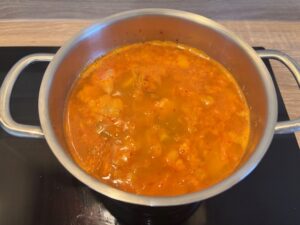
- Add 1 tbsp fish sauce or soup soy sauce, and also add onion.
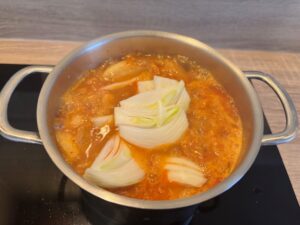
- Let it simmer for about 15 minutes.
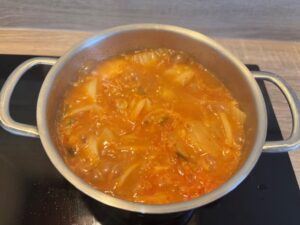
- Taste and adjust seasoning with salt if needed.
- Add tofu and chopped green onion.
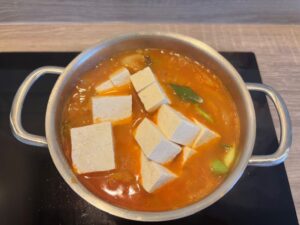
- Simmer for another 5 minutes.
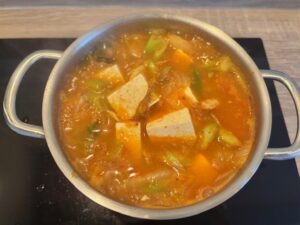
- Done! Enjoy with rice!
Notes
Tips for better flavor
- The key is stir-frying the pork and kimchi well at the beginning.
- If your kimchi isn’t very sour, add 1/2 tsp sugar to boost flavor.
- For a richer taste, increase the amount of pork slightly.


