

Ingredients
Method
Make the Gochujang Butter
- Soften the butter at room temperature in a mixing bowl.
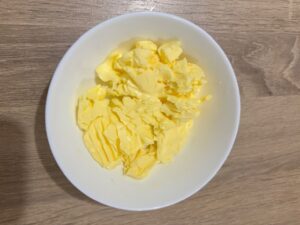
- Add gochujang, minced garlic, Parmesan cheese, and honey.

- Mix well until smooth and fully combined.
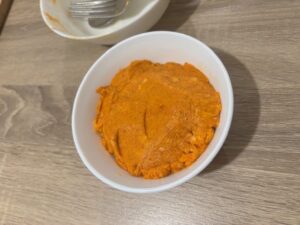
- Store in the fridge to firm up.
Cook the pasta
- Cook the pasta in salted boiling water for 10 minutes less than the package instructions.
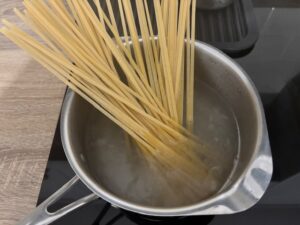
- Drain, reserving about 3 tbsp of pasta water.

- In a pan, heat a little olive oil and sauté the minced garlic and onion over low heat until fragrant.
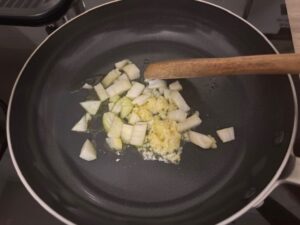
- Add shrimp and cook until just done.
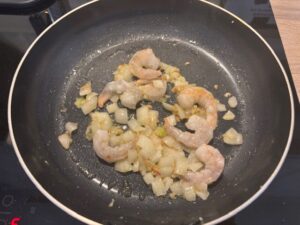
- Add 1½–2 tbsp of gochujang butter to the pan and let it melt over low heat.
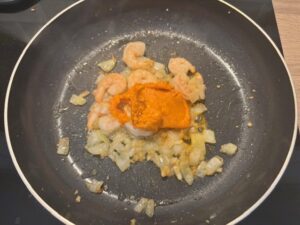
- Add the cooked pasta and a few tablespoons of pasta water.
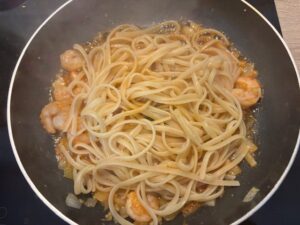
- Toss until everything is evenly coated and glossy.
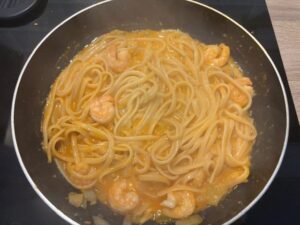
- Season with black pepper to taste.
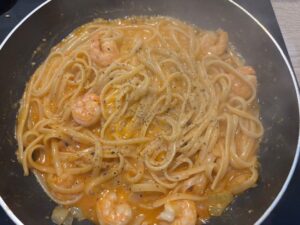
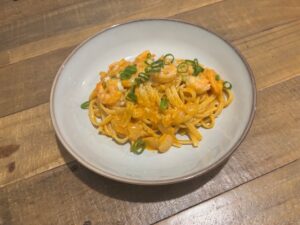
- Plate the pasta and top with chopped green onion and extra Parmesan cheese.
Notes
Tips
- For a milder flavour, reduce gochujang and add a bit more honey.
- You can substitute shrimp with bacon, squid, or mushrooms.
- The leftover gochujang butter is great on rice, toast, or roasted veggies!
- Best Pasta Types for Gochujang Butter Pasta
-
Spaghetti – ⭐ Most recommended
- The go-to choice for balance.
- Thin enough for light coating but sturdy enough to hold the buttery gochujang sauce evenly.
-
Linguine
- Slightly flatter than spaghetti, giving more surface area for the sauce.
- Great if you want a silkier texture.
-
Fettuccine
- Works well if you prefer a creamy, richer version.
- Perfect for extra butter or cheese lovers.
-
Angel Hair (Capellini)
- Light and delicate — nice if you want a quick, subtle version.
- Best with less sauce, since it can get soggy easily.
-
Penne or Fusilli (short pasta option)
- Good for a more casual, spoonable dish.
- The grooves trap bits of garlic, shrimp, and gochujang butter beautifully.
- If you want a Korean fusion twist, you can even use ramen noodles or somen instead of pasta
-
Spaghetti – ⭐ Most recommended